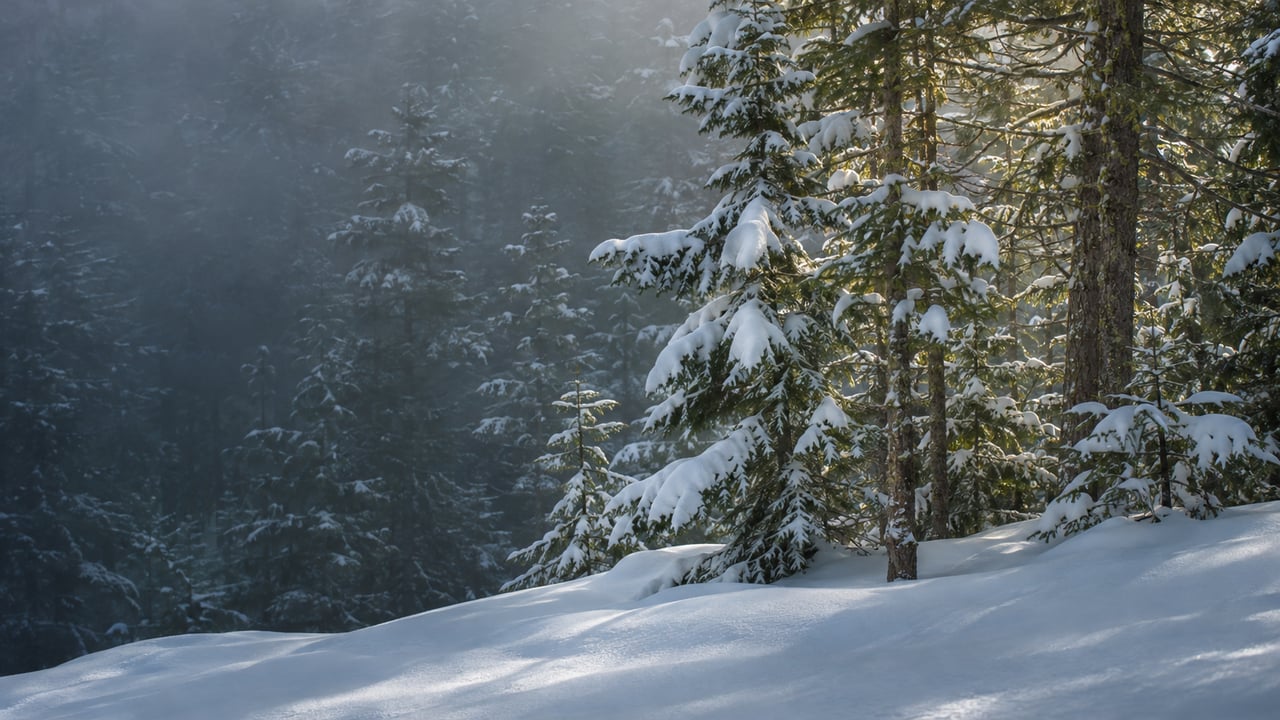
A big storm cycle on the Northwest chair leaves rime ice on the lift and snow buried around it. In an interview with the Storm Skiing Journal recorded October 28, Mt. Bachelor president and general manager John Merriman said, "Sometimes it takes us, you know, a full day to recover from a storm over there, just because of all the ice you gotta get off the lift, and you gotta dig it out." That full day matters most on Northwest, which he called the mountain's most popular lift on powder days. Its terrain is all advanced, which he described as "bowls into tree skiing."
The 2026-27 season at Mt. Bachelor targets Friday, December 4, conditions permitting. Its two largest projects are both about winter weather. Neither adds terrain. The Northwest chair is being rebuilt so it can recover faster after a storm, and a new plant in West Village will heat the base area using wood from the surrounding national forest. In both projects, the forest set the terms.
Same Towers, New Guts
Northwest is a 1996 Doppelmayr high-speed quad. In the Storm interview, it was described as 8,377 feet long with 2,365 feet of vertical. Merriman was candid in that interview: "We have been having fits with that lift, honestly." As the motor wore down, the lift lost power, and at times it couldn't run at full capacity because of power draw.
The fix came in two steps. The power supply to the lift was upgraded last season. This season, Doppelmayr is replacing what Merriman called "all of the guts of the lift" and leaving the towers, chairs, and haul rope in place. Here is how the work divides, based on the resort's project updates and the interview:
| Staying | Being replaced or added |
|---|---|
| Towers | New electric motor and drive |
| Chairs | Diesel backup motor and fuel tank |
| Haul rope | Drives and controls |
| Terminals and foundations | Buried conduits and fiber optics |
| Two-story operator and patrol dispatch shack at the top | |
| Semi-enclosed "park rail" chair-storage building at the bottom | |
| Maintenance garage at the bottom terminal |
Merriman said the new parts will match those on the Skyliner lift, which the resort replaced three summers ago, making Northwest "like a brand new lift without having to replace everything." In the same interview, he estimated that a full six-pack replacement would cost more than $15 million and that a modernization runs one-third to one-half of that.
The October 1 Line
Cost was only part of the reason. Merriman said the Northwest area is spotted owl habitat, and under the Forest Service's wildlife restrictions there, "the general rule is no work after October 1st in that area." Installing a new lift between October 1 and opening day "is not going to happen," he said, and getting an exception typically takes years of approvals.
So the habitat calendar shaped the project. A modernization keeps the heavy pieces where they already stand, so the work fits inside the summer. Merriman said flying in towers is one of the more expensive parts of a full replacement, and this approach avoids it.
Because the towers, rope, terminals, and chairs stay, the lift keeps its existing layout. Merriman said wind will still force the lift to slow down, though the more powerful, more efficient motor should allow higher speeds when conditions permit. The improvement shows up on the morning after a storm.
Where the Storm-Day Hours Come Back
Three parts of the rebuild go after the full-day recovery Merriman described.
- Buried communications. Fiber and conduit used to run above ground on Northwest, exposed to severe weather and ice. The resort says nearly all of that infrastructure is now underground, and maintenance crews expect fewer interruptions from icing. In past seasons, an ice-related cable fault could stop the lift while crews tracked down the problem.
- A garage for the chairs. The park rail is a semi-enclosed building where chairs can be stored during a storm. The resort says it will reduce storm recovery and snow removal and speed up opening after significant weather.
- Night drive. With the chairs stored, the rope can keep turning through a storm at about half a meter per second. Mt. Bachelor already does this on the Summit lift. Merriman said a moving rope picks up less ice, so restarting after a storm is "a heck of a lot easier."
"We're still gonna have to dig it out, but ideally, we have a lot less ice clearing that we have to do, and we get it open for people on powder days a lot earlier." John Merriman, speaking to the Storm Skiing Journal
By the resort's September update, the underground conduit and fiber were in and backfilled, the new power infrastructure was finished, and the park rail foundation was poured. Crews were about to crane the new motor, drive, and diesel backup into the terminal. An October 2 report in MyCentralOregon described major components being craned in and the chair-storage structure going up. The resort's stated goal is "a more reliable, efficient and storm-ready Northwest chairlift for the 26/27 season."
Heat at West Village From Forest Slash
The second project follows the same idea at the base area. Mt. Bachelor's Wood Fuel Energy Facility in West Village is designed to burn wood byproducts from Forest Service-approved restoration and wildfire-mitigation work in the Deschutes National Forest. The resort says that material would typically be burned in open slash piles.
The plant is built around a 1,200-kilowatt biomass boiler and will distribute heat through insulated underground pipe to Ski Patrol, West Village Lodge, Mountain Gateway, the Todd Lake building, the Bachelor Butte Administration Building, and the West Village snowmelt system. Once it is running, the resort expects it to cut propane use by about 150,000 gallons a year, more than 90 percent, and reduce carbon dioxide emissions by nearly 1,000 tons a year, replacing fuel that is trucked in.
As of the resort's October 13 update, construction was complete. The plant was connected to four of the five buildings, and on-site commissioning had begun ahead of an expected December 2026 start. Both projects deal with winter storms, and both depend on the forest. The owl habitat limits when the lift crews can work, and the restoration slash is meant to fuel the heat plant.
Between Now and December 4
Snow has already fallen at the base. KTVZ reported 2 to 3 inches overnight on October 26. As of November 8, the resort's mountain report showed 12 inches of snow for the season, a 5-inch base, and none of its 12 lifts open. The resort says it may open before December 4 if conditions allow.
Details for the 26/27 season, from Mt. Bachelor's posted prices and the state's permit pages:
- Season passes. Adult Full Season is $1,499, adult Midweek is $1,149, the all-ages 5-Day Pass is $469, and the adult Nordic Full Season Pass is $449. The Nordic pass covers 56 kilometers of groomed classic and skate trails plus three snowshoe trails.
- Day tickets. Adult full-day window rates run $164 to $224 depending on the date, from December 4, 2026 through April 18, 2027. Day-of online tickets are $25 below the window rate, and advance purchases can cost less.
- Parking. The general lots at West Village, Sunrise, and Skyliner are free and first-come, first-served. Paid reserved parking is an optional, limited product at West Village and Sunrise.
- Getting there without driving. Cascades East Transit's winter service leaves Bend from Hawthorne Station or from the Mt. Bachelor Park & Ride near the Pavilion on Columbia Street and stops at West Village Lodge and Sunrise Lodge. On the mountain, the free Interlodge Shuttle links West Village, Skyliner, and Sunrise from 8:15 a.m. to 4:15 p.m. on weekdays and until 5 p.m. on weekends and holidays.
- The drive up. On November 8, TripCheck listed Highway 372, Century Drive, between Bend and Mt. Bachelor with a requirement to carry chains or traction tires regardless of conditions.
- Sno-Parks. Virginia Meissner Sno-Park and Wanoga Sno-Park both require a Sno-Park permit. ODOT sells them at $4 a day, $9 for three days, or $25 for the year, and requires them from November 1 through April 30.
Whether the rebuild works will show the first time a big storm clears overnight and Northwest's chairs come out of the park rail. The resort's target is to open that lift far sooner than the full day it used to need.
Part of choosing a home in Broken Top is knowing how the area works through a full winter, from Century Drive's chain requirements to how quickly the mountain gets running after a storm. If you're thinking about a winter purchase or sale on Bend's west side, Silvia Linda Giffin Knight offers practical, local guidance at every step. Schedule a confidential consultation.